Olives are one of those rare edibles that look just as good as they taste. Honestly, it's hard for an olive tree to be anything but stunning. Those silky…
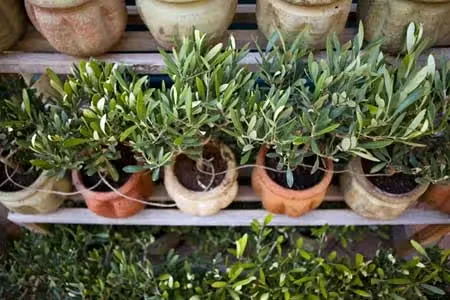
Olives are one of those rare edibles that look just as good as they taste. Honestly, it's hard for an olive tree to be anything but stunning. Those silky smooth leaves have silvery undersides that catch the light and shimmer whenever a breeze rolls through. (That silver sheen is actually a layer of fuzz, formed by tiny structures called trichomes, that helps the tree hold onto its moisture.) In youth, the branching pattern is supple and symmetrical, and the tree ages with a kind of rugged grace into a sparse, gnarled silhouette. If you're lucky enough to inherit a mature olive tree, you've got an instant landscape centerpiece with real presence.
A number of sterile Olea europaea cultivars have been developed for gardeners who'd rather skip the fruit and just enjoy the ornamental qualities. Sure, olives leave a purple-black stain wherever they drop, but that drawback disappears when you site the tree thoughtfully. Keep fruiting olives away from patios, sidewalks, driveways and other surfaces. They pair beautifully with a groundcover of clumping grasses or perennial herbs like rosemary and lavender. Full-size varieties may eventually reach 40 feet in height, though even when ancient—olive trees can live for hundreds, even thousands of years—they cast only light shade.
Like figs, grapes, pomegranates and their Mediterranean cousins, olives thrive in dryish, lean soil and a long, hot summer to ripen properly. Give them a south-facing spot in a xeriscape planting; once established they need watering only during extended dry spells. Olives are evergreen, and the smaller cultivars, such as 'Arbequina', 'Arbosana', 'Koroneiki', and 'Picual', are easily maintained as a head-high privacy screen. 'Pendolino', with its weeping willow-like branches, is one of the most eye-catching varieties. Olive cultivars can be self-pollinating or self-unfertile, but they all produce better when planted in a mixed grove.
A single tree usually produces more than enough olives for a family to enjoy all year. The self-pollinating 'Mission', the classic California courtyard olive, is a solid choice if you're only planting one—and it can even make you self-sufficient in olive oil. A healthy full-size tree produces anywhere from 15 to 500 pounds of fruit in a year, depending on the weather and a host of other factors, of which 15 to 30 percent is oil. Roughly speaking, you need about 15 pounds of fruit for a gallon of oil. The real challenge, of course, is getting the oil out of the fruit. Home-scale oil presses are available, but they'll set you back a fair amount. If you live in an olive-producing region, check with your local commercial presses—they often set aside a day for hobbyist growers to bring in their olives.
It's also worth noting that olives have a fairly limited growing range. Cold hardiness varies by cultivar, ranging from 10˚ to 20˚ (F), though flowers and fruit are both damaged around 28˚ or 30˚. However, the smaller cultivars can be grown in a large tub and brought indoors for winter. Olives thrive and produce fruit better than most plants when their roots are confined. You'll have to harvest your olives green since they don't reach full ripeness until late fall. Happily, that's a perfectly acceptable, and common, approach.
How to cure olives Olives are loaded with bitter alkaloids, making the fruit inedible right off the tree—one reason some gardeners hesitate to plant fruiting varieties. Stories about lye baths and complicated sequences of stirring, heating and cooling tend to scare people away from curing their own olives, which is a real shame because it's fundamentally simple. Curing olives with lye produces the least bitter olives in the shortest amount of time, but there are much easier methods with equally tasty results. Soaking the fruit in water, changed daily, for a couple weeks is the easiest option. Then soak them in a brine of salt, vinegar and herbs and keep them in the refrigerator for snacking. Many variations on this basic process are available online; start with this University of California publication.
Image credit: Jacques Pault/Shutterstock
More from Home
Uncommon Herbs to Grow at Home
Most of us, when we think of culinary herbs, automatically picture the Mediterranean staples: basil, mint, oregano, thyme, sage,…
Growing Beans in the Home Garden
Beans are one of the most rewarding crops you can grow at home—honest, they practically take care of themselves. Here's what I've…
How to Grow Scallions in a Home Garden
Scallions—green onions, spring onions, whatever you call them—are one of those kitchen staples I always want within arm's reach.…