Here's how to keep your melon patch healthy and productive all season long:
Here's how to keep your melon patch healthy and productive all season long:
1. Pollination ensures fruit set. Cantaloupes, honeydews, and other melons belong to the cucurbit family alongside squash and cucumbers, but they won't cross-pollinate with one another. Cucurbits produce separate male and female flowers. If bees are scarce in your garden, don't hesitate to step in—gently pluck a male flower and brush its anther against the center of a female flower. Sometimes you've just got to be the pollinator yourself.
2. Careful watering prevents disease. Melons are roughly 94 percent water, so consistent irrigation is critical as vines, leaves, and fruit develop. Full, lush foliage produces the sweetest melons, and healthy leaves matter. Overhead watering from hoses or sprinklers invites fungal diseases and powdery mildew, which directly hurts fruit quality. Before planting, snake soaker hoses throughout the bed. A simple hose timer can help you deliver about one inch of water per week without overthinking it. On scorching days, the foliage may look wilted, but well-watered plants will bounce back once the sun drops. The soil should never feel waterlogged. About a week before your first melon ripens, cut back on watering—just enough to keep vines from wilting. This prevents fruit cracking and keeps sugars concentrated where you want them.
3. Give melons a boost with fertilizer. Once blossoms appear, feed each plant about one tablespoon of nitrogen fertilizer (33-0-0), and repeat three weeks later. If you're not using plastic mulch, lay down three inches of organic mulch around mid-season to keep roots happy.
4. Trellising improves air flow and deters pests. Melons need room—the vines will swallow garden space in a hurry. Growing vertically saves space and keeps air moving. Plants at the base of a trellis only need 12 to 24 inches of spacing. A 16-by-4-foot livestock panel supported by steel posts will handle most small to mid-sized melons. Tie the vines to the support regularly. When trellised fruits hit about three inches across, cradle them in slings made from old stockings or netting. Fruits resting on the ground are far more prone to rot and pest damage than hanging ones. For ground-sprawling melons, prop them up on an overturned flowerpot, a coffee can, or a bed of straw.
When growing melons, keep an eye out for cucumber beetles, aphids, squash bugs, and squash vine borers. The best approach is to catch problems early—handpick pests when you see them, and remove any badly damaged plants before the infestation spreads.
5. When is a melon ripe? Once the fruit sets, it typically ripens within 3 to 5 weeks. Knowing what your particular variety should look, feel, and smell like is your best guide for timing the harvest.
True to their name, muskmelons give you a fragrant heads-up when they're ready. When the rind turns buff and mottled, look for a crack forming at the base of the stem. A ripe muskmelon will slip cleanly from the vine with a gentle twist—no tugging required.
Smooth-skinned melons—honeydew, canary, crenshaw, and casaba—should be cut from the vine at ripeness rather than left to slip. The skin may feel slightly hairy before smoothing out into a waxy finish. Press gently on the blossom end; if it yields slightly and gives off a floral, fruity scent, it's time.
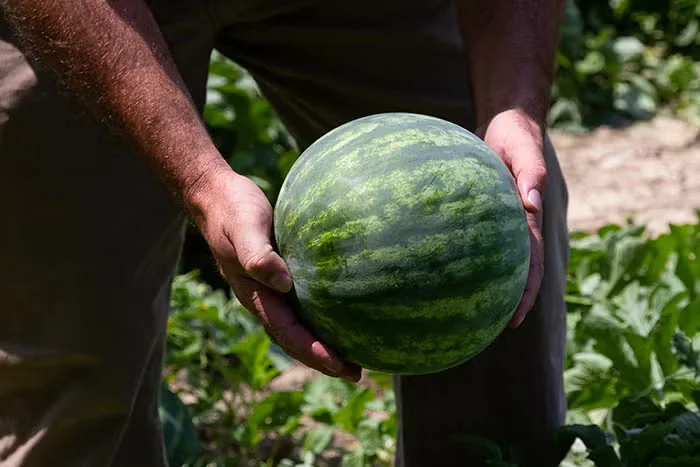
Watermelons are ready when the tendrils closest to the fruit dry up and wilt, and the rind shifts from glossy to slightly dull. Flip one over and look for a large, cream-colored ground spot, along with those classic alternating green stripes. That's your cue.
More from Home

Uncommon Herbs to Grow at Home
Most of us, when we think of culinary herbs, automatically picture the Mediterranean staples: basil, mint, oregano, thyme, sage,…

Growing Beans in the Home Garden
Beans are one of the most rewarding crops you can grow at home—honest, they practically take care of themselves. Here's what I've…
How to Grow Scallions in a Home Garden
Scallions—green onions, spring onions, whatever you call them—are one of those kitchen staples I always want within arm's reach.…