If you sit down and list the perennial vegetables most folks grow in North America, it's a pretty short list. Asparagus, artichokes, and rhubarb—those might be…
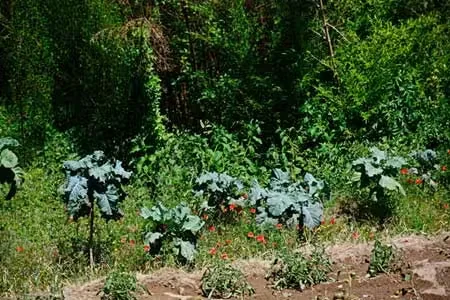
If you sit down and list the perennial vegetables most folks grow in North America, it's a pretty short list. Asparagus, artichokes, and rhubarb—those might be the only three that come to mind for most gardeners. Beyond fruit, not many perennial food plants have won enough of a following to show up at every garden center. What's odd, though, is that tree collards haven't made their way into that familiar lineup—a truly delicious, easy-to-grow member of the Brassica clan that deserves a spot in every backyard patch.
Tree collards can reach 10 feet or taller, but a quick trim keeps them at a manageable 4-foot "shrub." Now, they don't exactly look shrub-like—more like a single spindly stalk topped with a crown of big, collard-like leaves that spill over like a cheery pom-pom. You'll notice purple tones on the foliage and fresh stems. Where tree collards really shine, though, is in the kitchen. They're every bit as good as—if not better than—any other brassica on your plate. Without the oxalic acid that gives most brassicas their slight bite, tree collards taste mildly sweet and nutty, even raw, and the tender stems never get stringy. Think of them as baby kale for salads, but the mature leaves grow up to 10 inches long and hold up beautifully in cooking. Swap them into any recipe that calls for kale or collards and you won't be sorry.
Nowadays you won't have any trouble tracking down tree collards online, but here's a tip: hunt for varieties with strong purple coloring, since those are the sweetest and most robust growers. Pure green varieties likely descend from perennial kale relatives—there are several of them—and they've stayed obscure for good reason, as they're neither as tasty nor as vigorous as true tree collards. One thing to watch for: tree collards are sometimes sold under the name tree kale, so read the descriptions carefully.
How to Grow Tree Collards Give tree collards the same conditions any brassica loves—full sun to dappled shade, rich soil that's not too acidic, and plenty of water—and they'll thrive. Since they're perennials, though, you'll need to do some specific pruning and training, and give a little thought to how they fit into your overall garden layout.
Left to their own devices, tree collards tip over and turn into a tangled mess of arching stems. That's why most gardeners train them up a stake, which keeps a tidy crown of foliage at the top—almost like a rose standard. You pick the height you like and prune back to that point each year, which turns this otherwise gangly plant into something worthy of a starring spot in the landscape. If you'd rather keep things simple, plant rooted cuttings 18 inches apart and cut them back to 12 inches twice a year. That builds a short, sturdy trunk that can hold up the weight of all those leaves without any fuss.
Tree collards are hardy down to about 20˚F, and they're perfectly happy in a container you can lug indoors for winter if you live in a colder region. Another option: treat them as an annual and keep the line going by taking cuttings each fall, rooting them inside, and setting them back out in spring. Like their collard cousins, tree collards handle heat better than most brassicas—and the best part is you can harvest from them every single month of the year.
Image credit: CaronB / iStock / GettyImages
More from Tree
How to Diagnose What Killed Your Peach Tree
A reader asked: Last spring I planted a peach tree, and it promptly died. Someone told me that peach trees won't grow near pines.…
Compact Edible Plants for Small-Space Gardens
Picture this: you're on your back patio, and you reach over to pluck a sun-warmed cherry tomato from a plant barely eight inches…
Uncommon Herbs to Grow at Home
Most of us, when we think of culinary herbs, automatically picture the Mediterranean staples: basil, mint, oregano, thyme, sage,…