Just because autumn rolls in doesn't mean the homegrown harvest has to end. I pull a wide variety of vegetables from the garden well into fall and even winter,…
Just because autumn rolls in doesn't mean the homegrown harvest has to end. I pull a wide variety of vegetables from the garden well into fall and even winter, tucking them under season extenders like cold frames and mini hoop tunnels.
The real trick to harvesting year-round is pairing the right plants with the right season extenders.
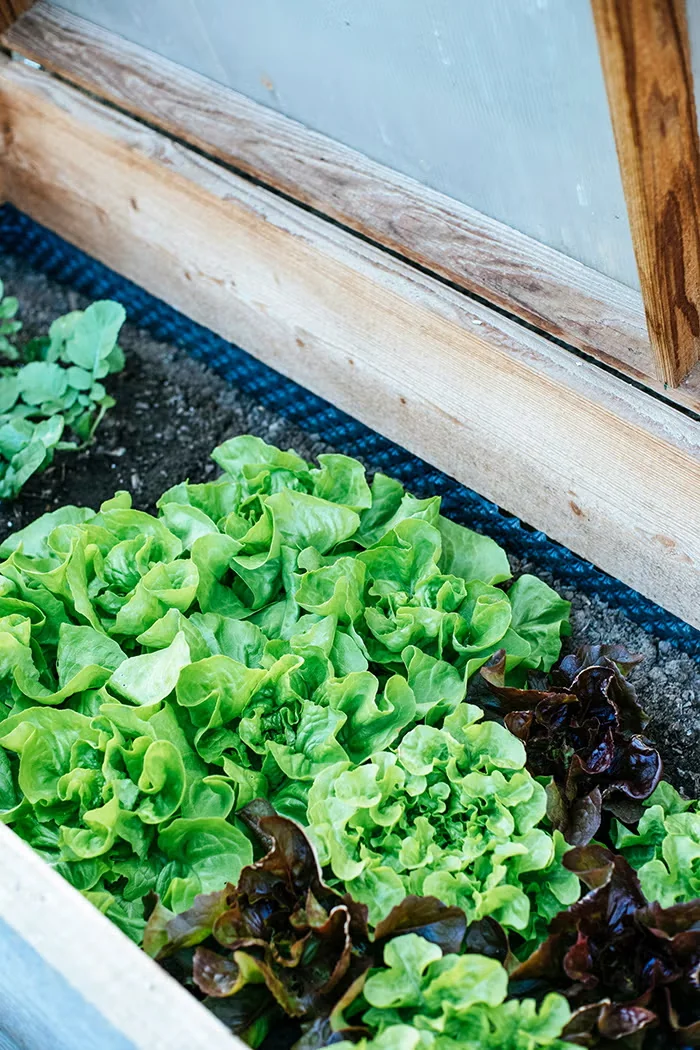
Vegetables to grow in fall and winter
The right plants are the cool-season vegetables—lettuce, spinach, kale, scallions, carrots, and Asian greens. These go in from midsummer through early autumn, depending on the crop. As for the right season extenders, I'll get into those below.
When you're picking seeds, read the variety description closely and look for cold tolerance. 'Auroch' spinach, for instance, is one of my go-to varieties for winter harvests. The smooth, upright leaves are very cold hardy, and it does beautifully in a cold frame, mini hoop tunnel, or greenhouse. 'Rouge d'Hiver' lettuce is another winner for fall and winter—those green-bronze leaves hold up remarkably well when the temperature drops.
The variety name itself often hints at cold hardiness. 'Winter Density', 'North Pole', and 'Winter Marvel' lettuces are among my favorites for fall, winter, and very early spring growing. Another good one: 'Winter King' cabbage, a savoy type that actually gets sweeter as the cold sets in.
When to plant cool-season crops
Once you've chosen your vegetables and varieties, check the "days to maturity" to find out how long they need from seed to harvest. 'Rouge d'Hiver' lettuce takes about 50 days to form full-sized heads. To figure out when to plant, I count backward from my last expected fall frost date, which is around October 20. That puts me at August 31. Since vegetables grow more slowly as autumn days shorten, I add an extra week of growing time. So I'd plant 'Rouge d'Hiver' lettuce seeds on August 24.
Other vegetables I grow for fall and winter harvests include daikon radishes, Chinese cabbage, peas, beets, parsnips, cabbage, broccoli, turnips, and leeks.
4 season extenders for cool-season crops
There are plenty of season extenders to choose from. I make most of mine myself, but you can also buy structures like mini tunnels and cold frames from garden-supply stores. Here are four types I rely on in my fall and winter garden:
A mini hoop tunnel is essentially a small greenhouse with two parts: hoops and a cover. I make hoops from half-inch-diameter PVC conduit or 9-gauge wire, spacing them two to three feet apart, then drape the whole thing with row cover or clear poly, securing it with snap clamps or by weighting down the sides. Lightweight wire hoops work fine for fall vegetables, but before winter snow arrives, I swap them out for sturdier PVC hoops.
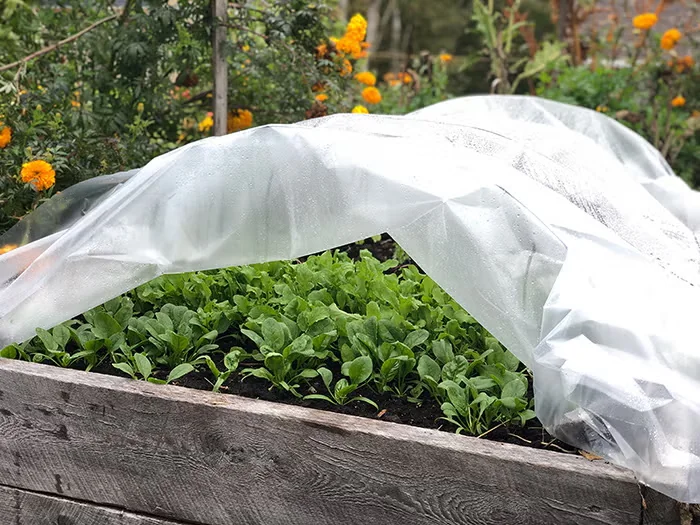
Mini hoop tunnels are handy for spring, fall, and winter harvesting, especially for taller crops like mature kale, leeks, broccoli, spinach, and scallions. Depending on the crop and cover material, a mini tunnel can stretch your harvest by weeks or even months.
Cold frames are compact, versatile structures that fit into even the tiniest garden spaces. Think of a cold frame as a bottomless box with a clear lid—the box shields vegetables from biting winds and weather, while the top captures solar energy to warm the interior.
I build cold frames from durable wood like hemlock or cedar and top them with polycarbonate or an old window. Garden stores sell cold-frame kits too, typically with polycarbonate boxes and tops, though they're not as insulating as wooden ones. Whatever type you go with, place it where it'll catch full sun through winter. Most cold frames have slanted tops to maximize incoming light—face the slant toward the south.
A walk-in structure like a polytunnel or greenhouse is a real game changer. It gives you more growing space than a cold frame or mini hoop tunnel and earns its keep in multiple ways. My polytunnel is perfect for starting seedlings in spring, overwintering tender crops like artichokes, growing heat-loving vegetables in summer, and keeping me in leafy greens and root crops through fall, winter, and early spring.
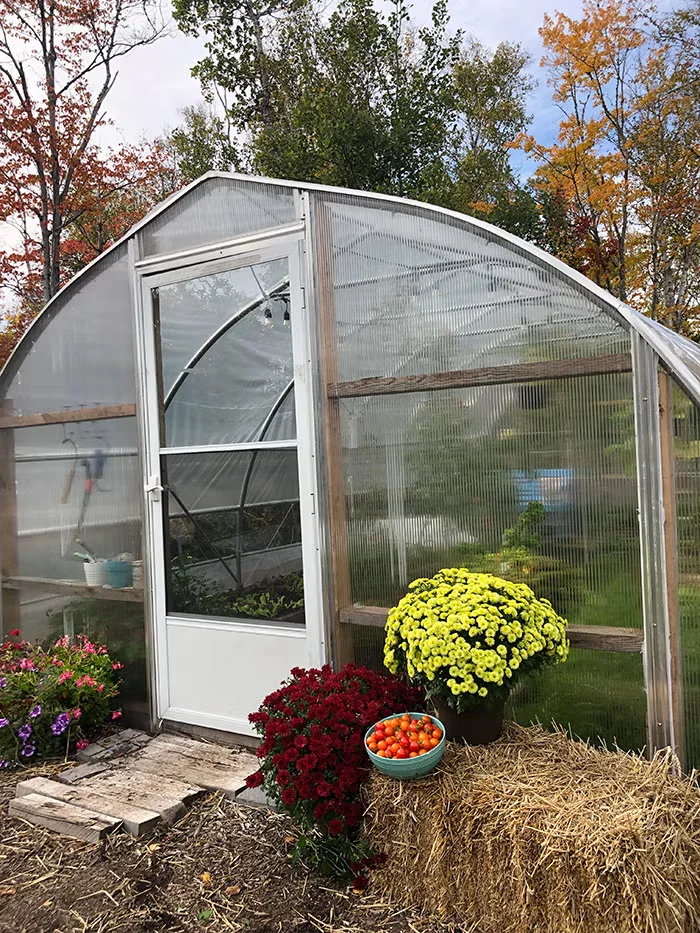
As with other season extenders, you can DIY or buy a greenhouse or polytunnel in many sizes and styles. Since I live on the coast where hurricanes and heavy snow are yearly concerns, strength and durability were non-negotiable. I shopped around and eventually bought a 14-by-24-foot polytunnel kit. It offers plenty of growing space, has sturdy steel hoops built for extreme weather, and the sides roll up for easy ventilation. Plus, it fit my budget. Polytunnels (also called hoop houses) cost much less per square foot than a glass or polycarbonate greenhouse.
Last but not least, don't overlook the simple magic of mulch! A thick layer of straw or shredded leaves is among the most basic season extenders, providing an insulating winter blanket for root and stem crops like leeks, carrots, beets, and parsnips.
In late autumn, before the ground freezes solid, pile on a 10- to 12-inch-thick layer of mulch over your beds. Cover it with an old row cover or bedsheet to keep the lightweight material from blowing away. When you want to harvest, just lift the fabric, reach under the mulch, and pull out a few roots. Quick, easy, and oh-so-satisfying!
More from Crops
Compact Edible Plants for Small-Space Gardens
Picture this: you're on your back patio, and you reach over to pluck a sun-warmed cherry tomato from a plant barely eight inches…
Uncommon Herbs to Grow at Home
Most of us, when we think of culinary herbs, automatically picture the Mediterranean staples: basil, mint, oregano, thyme, sage,…
Grow Blueberries and Their Relatives to Benefit the Garden and Your Health
Isn't it something how the simple things we love as kids end up opening into whole worlds of discovery as we get older?…