Basil is the undisputed queen of the summer herb garden, and for good reason—it's aromatic, versatile, and an absolute must-have for anyone who loves cooking…
Basil is the undisputed queen of the summer herb garden, and for good reason—it's aromatic, versatile, and an absolute must-have for anyone who loves cooking with fresh ingredients. If basil hasn't found its way into your garden yet, trust me, you're missing out.
Originally from Southeast Asia and central Africa, basil made its way around the globe thousands of years ago—Aristotle even referenced it as basilkon. It's no wonder the types of basil are as diverse as the cultures that have embraced them.
That said, when most Americans picture basil, we're usually thinking of the ever-popular sweet basil (Ocimum basilicum; USDA Zones 9–11). But we're blessed with varieties in every shape, size, and color imaginable. There's a whole delicious world beyond that traditionally sweet (yet pepper-tinged) flavor, too. Cultivars run the gamut from citrus to cinnamon, opening up endless possibilities in the garden and at the dinner table.
This year, why not grow a tried-and-true staple alongside one or two of the less common types? You might just stumble onto a new favorite.
Sweet Basils Kenan and Briscoe White, owners of The Growers Exchange in Virginia, have their fingers on the pulse of what basil lovers want. Kenan points to the Italian 'Genovese' as one of their top sellers. With midsize, slightly crinkled leaves, 'Genovese' has that quintessential flavor anyone craving classic Italian taste is after.
While 'Genovese' steals the spotlight in the kitchen, other sweet basils deserve a spot too. The mammoth 'Lettuce Leaf'—with a sweeter flavor profile—is wonderful in sandwiches, tossed into pasta, or as the star of a caprese salad. 'Lettuce Leaf' is also slow to bolt, meaning it won't rush into producing flowering stems at the expense of foliage. For a more intense flavor, try 'Romanesco', which has a higher oil content and a richer aroma. Typically reaching 24 inches tall, it's a prolific producer that keeps you in basil all season.
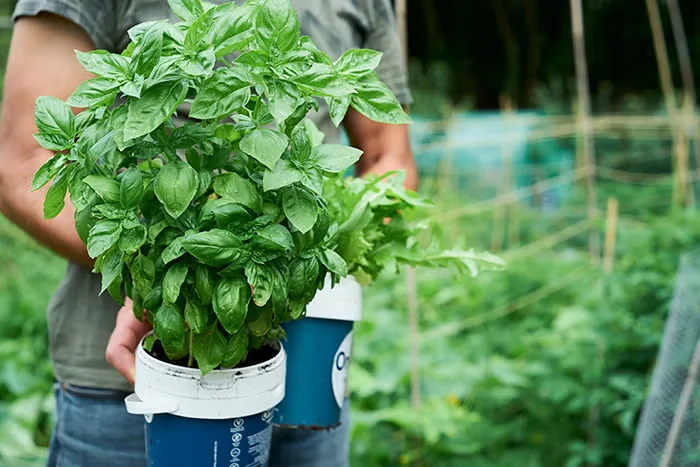
Basil is one of those herbs that's perfectly suited to tight spaces. Give it a rich planting mix and decent drainage, and it'll be happy in a container right by the kitchen door. An excellent variety for pots is the 14- to 18-inch-tall 'Emily', which delivers that classic flavor in a compact, manageable size.
Basil really deserves more appreciation as an ornamental, too. "I use a lot of my basil for the foliage in my flower arrangements," says Kenan, adding that basil flowers can be tucked into bouquets as well. "They do bloom all summer, but those are not going to be the ones I use for cooking."
'Cardinal' earns its name with large clusters of brilliant red flowers that make the plant look almost like celosia. But one sniff of the deep green leaves and you know it's basil. You'll want to pinch off those gorgeous flowers before they fully form to keep the foliage from turning bitter, especially if you plan to use 'Cardinal's strong anise flavor in the kitchen.
The mounded, cinnamon- or clove-scented 'Spicy Globe' is always a conversation starter. It's so handy to just pluck a few of its tiny leaves for a dish, rather than chopping up larger leaves from other varieties. It's slow to bolt, but if you're growing it for its tidy, foot-tall rounded shape, you'll still want to trim it before flowers form.
Purple Basils Most folks know how delicious basil is, but many overlook what a stunner it can be in the garden. Tucking purple basil into your vegetable or flower bed is a great way to explore the herb's ornamental side. Purple basil really shines when used fresh and raw, holding onto that gorgeous color beautifully. Pair it with vibrant gold tomatoes or toss it into fruit salads for a striking presentation. It also turns lemonade a lovely pink hue, and its flavor plays nicely in this sweet-sour drink. Beyond these ideas, you can use purple basil just like sweet basil, though the color sometimes turns out darker than you'd expect in certain dishes.
'Purple Ruffles' earned its All-America Selection status back in 1987 and has remained a garden favorite ever since. With fringed and crinkled deep purple leaves, it's a real showstopper with a bold flavor to match. It doesn't grow quite as vigorously up North as it does in warmer regions, but it'll still reach 16 to 18 inches.
The darkest purple basil around, 'Amethyst Improved', is also the only Genovese-type among the purples—making it a double standout. With its two-inch, shiny, almost black leaves, it brings a familiar basil flavor to the kitchen along with serious visual drama.
Meanwhile, the Mediterranean 'Corsican' has a look all its own, thanks to its small purple-mottled green leaves. It's beloved for its spicy flavor, which really sings when the leaves are used fresh alongside sliced fruit or tomatoes, or tossed into cold salads.
Citrus Basils Most people describe basil flavor with words like anise, menthol, or minty. Citrus basils bring a bright, lemony punch to all sorts of dishes.
Lemon basil (O. basilicum var. citriodora) typically has small leaves, but what it lacks in size it makes up for in flavor. One of the culinary standouts is the heirloom 'Mrs. Burns', famous for its strong citrus tones. It grows up to 24 inches tall and half as wide, so give it room in the garden or a roomy container.
Lime basil (O. americanum) tends to be milder than the other citrus basils, but its bright, zesty flavor is still a welcome addition to salads and other dishes—especially paired with lemon basil. Growing between 16 and 24 inches tall, it holds its own in an herb or vegetable bed.
Thai Basils With its distinct licorice and spicy flavor, Thai basil is a must for anyone who loves Southeast Asian cooking. But it's versatile beyond the kitchen, too. One of the most sought-after varieties is holy, or Tulsi, basil (O. sanctum), revered for its medicinal and religious qualities—particularly in Hindu culture, where Tulsi is considered a plant goddess.
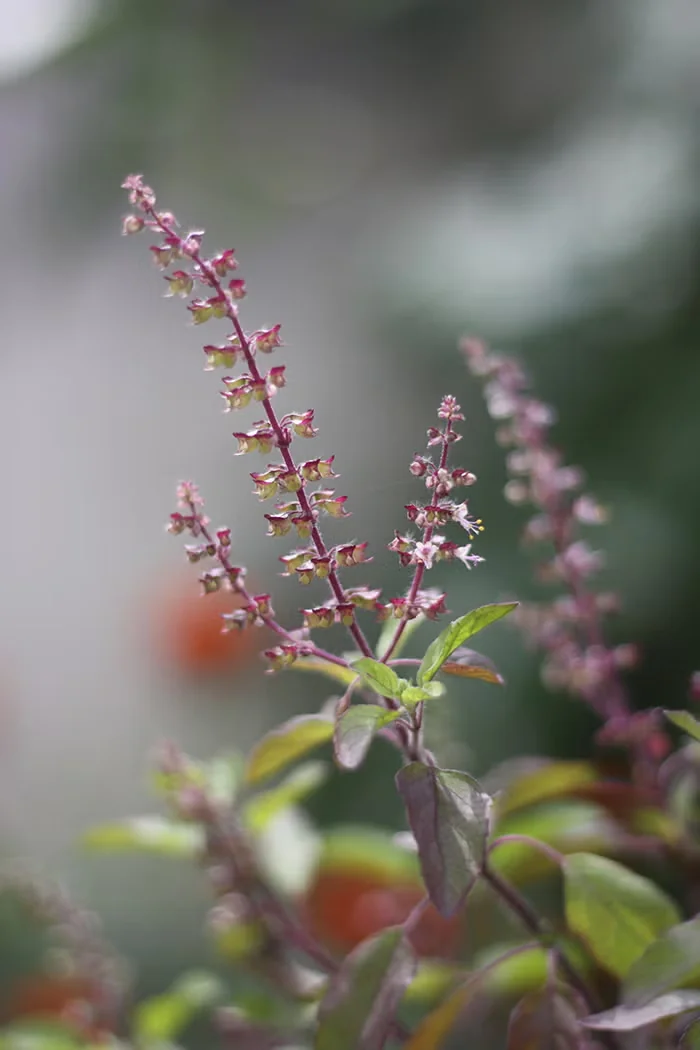
Kenan and Briscoe White started growing it at their customers' request, but it wasn't easy—they couldn't source O. sanctum seed anywhere. "It took us about three years to find the actual Tulsi seed," says Kenan. Now it's one of the top 10 sellers among all their herbs.
Holy basil is trickier to germinate than sweet basil, and it offers smaller leaves from a plant that grows approximately 18 inches tall. Use it as a tea or in any dish where you want a spicy kick of flavor.
With purple stems and pinkish-purple flowers, 'Siam Queen' (O. b. var. thyrsiflora 'Siam Queen') is a stunning addition to the garden and a must-have for anyone who enjoys Thai-inspired dishes. It has a spicy flavor with undertones of licorice and clove.
With so many beautiful basil varieties out there, you really can't grow just one. Whether you've been growing basil for years or you're just getting started with food gardening, stretch your horizons by tucking an unusual cultivar or two into the garden. You might just discover a new favorite.
More from Range
Compact Edible Plants for Small-Space Gardens
Picture this: you're on your back patio, and you reach over to pluck a sun-warmed cherry tomato from a plant barely eight inches…
Uncommon Herbs to Grow at Home
Most of us, when we think of culinary herbs, automatically picture the Mediterranean staples: basil, mint, oregano, thyme, sage,…
Grow Blueberries and Their Relatives to Benefit the Garden and Your Health
Isn't it something how the simple things we love as kids end up opening into whole worlds of discovery as we get older?…